
介绍
苍月浏览器是一款真正意义上的国民浏览器,通过对源生的火狐浏览器优化升级而来,在原有便携美观的特点上,大幅提升了网页的响应速度与效率,在火狐浏览器的基础上可谓是取其精华,去其糟粕,做到了真正意义上的高速浏览器。相较于传统浏览器崩溃、闪退等问题,这款浏览器就显得非常稳定,而这也正是其“母亲”火狐的优点,但火狐作为一款美国开源基金组织Mozilla研发的产品,对于我国人民的使用习惯还是有一点不适用,于是便延伸出了很多种第三方编译版,其中小编今天要介绍的这款苍月浏览器便携版就是完全以国人的实用习惯研发的一款浏览器,通过添加火狐的扩展,从而使得用户浏览器的界面更加美观,让其功能更加强大,更加的适用于新手,并且在有关数学及逻辑运算环节中,优化用户浏览器的速度及效率。
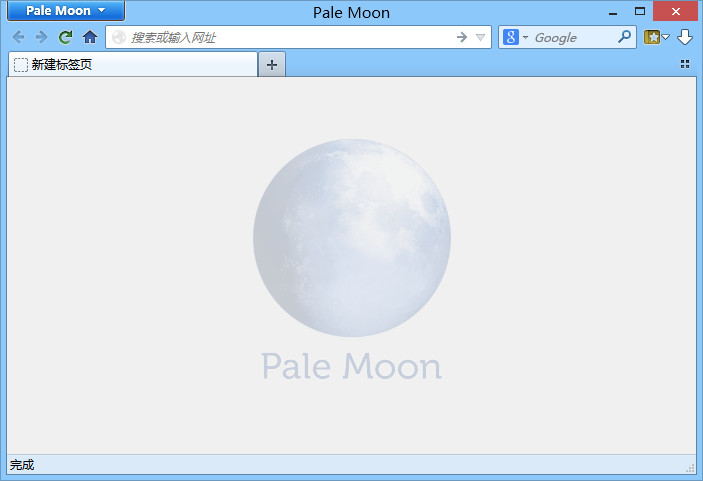
软件截图
软件特点
1、苍月浏览器相对于原版firefox 而言,其带来了更多的编译器优化,提高了其速度和效率,特别是有关数学和逻辑运算环节,Pale Moon的速度很占优,三角函数计算快32%,MD5哈希测试快31%。
2、特别的是,Pale Moon可以与firefox完全一样地使用firefox的扩展、插件等资源,firefox可以使用的延伸资源,Pale Moon 都可以使用。
3、这款浏览器相对于原版firefox 而言,其带来了更多的编译器优化,提高了其速度和效率,特别是有关数学和逻辑运算环节,Pale Moon的速度很占优,三角函数计算快32%,MD5哈希测试快31%。
4、特别的是这款浏览器中文版可以与firefox完全一样地使用firefox的扩展,插件等资源,firefox可以使用的延伸资源,Pale Moon 都可以使用。
1、这款浏览器能够渲染引擎Goanna
2、在迁移过程中可以减少语种的支持
3、这款浏览器26在界面上进行了大幅度的调整并开始适应各种操作
4、它的工具栏的书签按钮增加的历史按钮使用户更加专注于区分书签和访问历史
5、全新版本还添加了对显卡和多媒体的支持,包括WebP图像、适当缩放的EXIF-rotated的JPEGs和不同的WebGL文本格式
更新日志
v34.0.0 (2026-01-20)
New features:
– Our default theme on Windows received a refresh and update. It should integrate better with Windows 11 now, and be more responsive to dark accent colors, among other things.
– Implemented WeakRef. See implementation notes.
– Implemented URL.canParse().
– Implemented the inset-block and inset-inline CSS shorthands.
– Added a preference (privacy.forgetaboutsite.clearPasswords) to control clearing of passwords when using “forget about this site” in the permissions manager, and disabled clearing of passwords by default, since it was considered unexpected behavior by the community.
– Changed our JavaScript PRNG to Xoroshiro128++ to make it more robust while keeping high performance.
Important updates and fixes:
– Re-landed CSS Cascade Layers support after the previous back-out.
– Re-landed CSS color-mix support after the previous back-out. RGB and HSL color spaces only, like previous.
– Implemented viewport overflow propagation logic. See implementation notes.
– Unprefixed CSS -moz-appearance; Pale Moon now accepts the unprefixed CSS appearance keyword. For compatibility, -moz-appearance and -webkit-appearance (if enabled) have been retained, although the long-term plan is to eventually remove the -moz prefixed one, so if you are an extension or theme developer, please consider switching your CSS to use appearance without a prefix.
– Fixed an intermittent but fairly prominent crash-to-desktop due to JavaScript garbage collection on certain modern sites.
– Fixed a crash on sites with certain types of CSP handling.
– Fixed a crash in WASM.
– Updated NSS to 3.90.9 (custom) to pick up several security and stability fixes.
– Updated ICU to v78.1. This is a major uplift for our internationalization subsystem, allowing further future developments for the Internationalization API.
– Updated Emoji support to Unicode 17.
– Updated our expat parser code to a more recent version (2.7.3), fixing various issues.
– Improved handling and rendering of emoji clusters.
Other changes:
– Added support for building on Sparc64 hardware.
– Added support for building for NetBSD on Alpha.
– Added basic support for building on Mac PowerPC (still a work in progress).
– Added basic support for building on LoongArch64 hardware (龍芯 CPUs).
– Added support for running on FreeBSD 15.
– Removed automatic coloring of auto-filled login fields as it would interfere with various browser and system color schemes. If preferred, this can be reinstated by users with a userContent.css document or e.g. the Stylem extension by leveraging the :autofill CSS pseudo-class.
– Restored support for in-process NPAPI plugins, allowing plugin use on systems where out-of-process is undesirable.
– Improved JavaScript IonMonkey stability on ARM and Mac SoC hardware.
– Linux GTK builds now always build with gio, and gconf support has been removed.
– Security issues addressed: CVE-2025-13015, CVE-2026-0879 (DiD), CVE-2026-0880 (DiD), CVE-2026-0889 (DiD), CVE-2026-0883, CVE-2026-0886 (DiD), and several others without a CVE designation.
Implementation notes:
– This milestone implements WeakRef in the platform in 2 modes, controlled by a new preference javascript.options.weakrefs. In the default mode (false), WeakRef does not allow page content to reach into the JavaScript engine to coerce garbage collection, while still offering the front-end API to web content (effectively creating a stub). The other mode (true) allows this coersion and gives potentially malicious web scripting some* control over the JavaScript garbage collector. It is not recommended to set this to true for general use. Only enable this if your situation is running trusted code and explicitly requires nudging the JavaScript engine to dereference objects. We resisted having this strongly discouraged and potentially dangerous API at all, but some sites started to use WeakRef unconditionally and breaking without the API front-end, so this compromise was implemented, leaving control in the hands of the user. * The spec only allows for code to hint/coerce and does not guarantee if or when dereferencing happens.
– A number of sites (including some top Internet sites) have started using overflow-x: clip without overflow-y on full-document elements (document root/<html> or <body>). While doing this makes little to no logical sense, our strict implementation of clip (since 33.9.0, also see the implementation notes there) would, as a result, create unscrollable pages. There is some special logic for this (viewport overflow propagation) described in the relevant drafts which we have now implemented, updating our overflow: clip implementation to avoid the previously problematic strict behaviour in these particular cases.